Hey there, let’s cut to the chase—if you’re in the market for starters, drivers, or if you’re a design engineer just trying to keep your project from turning into an electromagnetic mess, I’m gonna walk you through the stuff no one else tells you. I’m part of a company that’s been supplying starters and drivers for over a decade, and we’ve seen way too many projects flop because someone skipped the EMC stuff. Let’s get into it. Starters & Drivers

First off, what even is EMC? If you’ve never sat through a boring engineering lecture, EMC just means two things: your gear doesn’t leak electromagnetic noise that messes with other stuff, and it can survive the noise that’s already bouncing around your workbench (or factory floor, or car, or whatever). For starters and drivers—those things that power motors, LEDs, relays, all the parts that make your device move or light up—this isn’t a “nice-to-have.” It’s a “don’t get a call at 2 a.m. because the new assembly line’s lighting is flickering during peak hours” thing.
Let’s start with where noise comes from in starters and drivers. Most of these are switching devices, right? Whether it’s a motor starter cycling on and off, or an LED driver pulsing current to save power, switching means rapid changes in voltage and current. Rapid changes equal high-frequency electromagnetic emissions. That’s the stuff that messes with your nearby Bluetooth, your sensor signals, even the radio in a forklift. As a supplier, we’ve had customers come to us last minute because their new conveyor’s motor starter was causing the factory’s wireless temperature sensors to drop packets. We fixed it, but that was a $5k emergency order that could’ve been avoided if they’d planned for EMC.
First big EMC consideration: emissions control for conducted and radiated noise. Conducted noise is the stuff that travels through the wires—your power lines, signal cables, even the ground plane on your PCB. Radiated noise is the stuff that jumps through the air. Let’s break that down. For conducted noise, most regions (FCC in the US, CE in EU, KC in Korea) have strict limits on how much noise your gear can push back onto the power grid. A lot of cheaper starters and drivers skip the input filters to cut costs, but that’s a ticking time bomb. We only offer our line of starters with built-in EMI filters because we tested this last year: a competitor’s basic motor starter put out 15dB more conducted noise on the 10MHz frequency band than our standard unit, and that was enough to cause issues with nearby PLCs. Also, don’t forget about the output side. If your driver is powering a long LED strip, the switching noise can travel down that 10m cable and radiate into nearby sensors. We added output common-mode chokes to our high-voltage LED drivers after a customer complained their building’s fire alarm sensors were triggering false positives—turns out the driver’s output noise was coupling through the wall to the alarm wires.
Then there’s radiated emissions. That’s trickier because it depends on your design’s layout, not just the starter or driver itself. As a supplier, we work with customers to give them layout guidelines because we can’t design their whole PCB. For example, if you mount a starter on a DIN rail, make sure the input and output cables are routed at right angles—don’t run them parallel. Parallel cables act like antennas, so the noise from the starter’s switching will bounce between them and make more radiated noise. We’ve seen a customer’s EV charger starter fail EMC testing because they ran a 1m input cable parallel to a 2m output cable, radiating 12dB over the FCC limit. A quick reroute fixed it. Also, ground planes are non-negotiable. A lot of hobbyists (and some low-budget engineers) skip a solid ground plane to save PCB space, but that’s like leaving your front door wide open for noise. The ground plane acts as a shield, so it’s gotta be connected to the chassis ground correctly—no broken traces, no loose screws when mounting the starter.
Now, the other side of EMC: immunity. That’s how well your starter or driver can survive noise from other stuff. A motor starter that works fine in your lab might die instantly in a factory with 10 other variable frequency drives (VFDs) all pumping noise. Why? Because those VFDs create a ton of common-mode noise that gets into the power lines. If your starter doesn’t have enough immunity, it’ll reset, act erratic, or even get damaged. For example, we had a customer in the food processing industry who installed 20 of our basic motor starters for their conveyor belts. Within a week, 3 of them were randomly shutting off. We tested them on-site with a noise generator—turns out the nearby VFDs were putting out 200V of common-mode noise, and the starters only had 100V of immunity. We swapped them for our high-immunity model, and that fixed it. The takeaway here: know the environment your starter/driver will live in. If it’s a crowded factory, don’t skimp on immunity.
Another common mistake: not considering the load. Starters and drivers are paired with different loads, and each load interacts with EMC differently. A motor is a big inductive load, right? When you turn a motor starter off, the inductive kickback can create huge voltage spikes that blow through your driver’s components—and also create massive noise. That’s why you need flyback diodes or varistors on the output of motor starters. We had a customer who tried using a standard starter for a 5kW conveyor motor, no flyback diode. The first time they shut the motor off, the spike was 1200V—way more than the starter’s rated 600V, and it fried both the starter and the adjacent PLC. We now include varistors as standard on all our industrial motor starters because of that lesson. For LED drivers, the load is a resistive one, but long LED strips can have a lot of capacitance, which can cause switching noise to ring. That’s why our high-power LED drivers have soft-switching capabilities—they turn on and off gradually instead of snapping, which cuts down on noise and also extends the life of the LEDs.
Wait, let’s talk about certification. A lot of people just buy the cheapest starter or driver they can find, not thinking about whether it’s already EMC-certified. FCC Part 15, CE EMC, whatever applies to your region. If it’s not certified, you’re basically rolling the dice. We do third-party EMC testing on every single one of our products before they hit the shelf. Why? Because once you sell a device that’s not certified, you can get hit with fines, and your whole product line might get pulled from the market. Last year, a small startup bought uncertified motor starters from another supplier, put them into their new line of robotics, and the FCC flagged them for excess emissions. They had to recall 500 units, which cost them way more than if they’d just bought certified starters in the first place. That’s a real story we heard at a trade show, so it’s not just “theoretical” stuff.
Also, for low-voltage vs. high-voltage applications. EMC rules are different, but the risks are bigger at higher voltages. A 230V motor starter has way more switching current than a 12V LED driver, so the emissions are higher. We noticed that a lot of customers forget that when designing low-voltage systems—they use a cheap 12V driver from Amazon, no EMC, and it messes with their Bluetooth earpieces in a portable robotic arm. We added a line of low-voltage EMC-certified drivers for IoT and portable devices after that exact complaint.
What about common-mode vs. differential-mode noise? Let’s keep this simple: differential-mode noise is the noise that’s between the two power lines (hot and neutral), common-mode is the noise that’s on both lines relative to ground. Conducted emissions limits usually have separate specs for both, so your starter/driver needs to handle both. Our input filters are designed to attenuate both, but some cheap filters only handle differential-mode, which leaves common-mode noise to leak out. That’s why we test for both every batch.
Now, let’s talk about real-world tests vs. lab tests. A lot of suppliers will pass lab EMC tests, but fail in the field because lab conditions are “perfect.” For example, a lab test might only run a 10-minute emissions test at room temperature, but a factory might run a starter 24/7 in 40°C heat, with humidity, and other devices running nonstop. We do field testing with our customers—we’ll send sample starters to a factory for a month, monitor their emissions and immunity, and tweak the design if needed. That’s the stuff that makes us different from the big box suppliers who just ship generic units. We listen to what works in the real world, not just what passes a 2-hour lab test.
Another thing: cable management. I can’t stress this enough. Even the best EMC starter/driver is useless if you run the cables wrong. If the cables are too long, they act like antennas. If they’re not shielded when they should be, noise seeps in or out. For example, our high-voltage motor starters require shielded output cables for runs over 5m. We include that in the spec sheet, and we had a customer ignore it—ran unshielded cables for 10m, and the noise from the motor starter was interfering with the nearby assembly robot’s sensor. We helped them swap to shielded cables, and it fixed it. Shielding is only good if you ground it properly, too—if the shield isn’t connected to ground at both ends, it’s like a shield with a hole in it. That’s a super common mistake, and we’ve written a quick guide for customers that walks through how to ground shields correctly.
Wait, let’s wrap this up with what matters most for you, the person buying starters and drivers. If you’re a design engineer: don’t cut corners on EMC. It’s not an extra add-on, it’s part of the design. When you’re sourcing, ask suppliers: “Is this EMC-certified?” “What filters do you have?” “Do you offer layout guidelines?” If they can’t answer those, go somewhere else. If you’re a plant manager or a procurement person: don’t buy the cheapest unit. The $5 difference in a starter costs you way more in downtime if it messes with your production line. We’ve had customers switch to us from another supplier because their old starters were causing 2 hours of downtime a week—they saved more in lost production costs than the extra they paid for our units.
And hey, if you’re dealing with a project where EMC is giving you headaches—whether it’s a robotics line, LED strip installation, motor control, whatever—we can help. We work with all kinds of clients, from small startups to big manufacturing plants, to pick the right starters and drivers, and even tweak designs if needed. We don’t just ship a box and ghost you—we’ve got engineers on call to answer EMC questions, troubleshoot field issues, whatever.
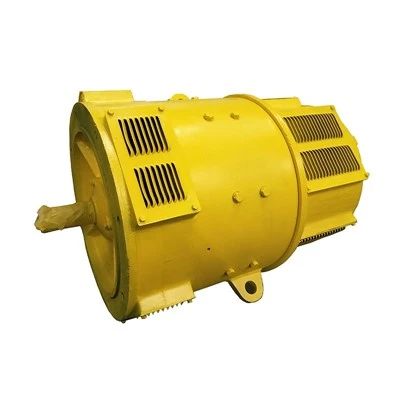
So, if you’re ready to stop stressing about your starters and drivers causing (or failing) EMC issues, hit us up. We’re here to make this part of your project easy, not another thing you have to figure out at 10 p.m. the night before your deadline.
MV Motor References
- Federal Communications Commission. (2023). Part 15: Radio Frequency Devices.
- International Electrotechnical Commission. (2020). IEC 61800-3: Adjustable speed electrical power drive systems – EMC requirements and specific test methods.
- European Committee for Electrotechnical Standardization. (2021). EN 55011: Industrial, scientific and medical (ISM) radio-frequency equipment – Electromagnetic compatibility standards.
- Institute of Electrical and Electronics Engineers. (2019). IEEE 1159: Recommended Practice for Monitoring Electric Power Quality.
Xian Putai Electric Motor Equipment Co., Ltd.
Xian Putai Electric Motor Equipment Co., Ltd. is one of the most professional starters & drivers manufacturers and suppliers in China, also supports customized service with low price. Welcome to buy advanced starters & drivers in stock here from our factory. If you have any enquiry about quotation, please feel free to email us.
Address: Haibo Guangchang Fengcheng Nine Road Economical & Technological Development District Xi’an City Shaanxi Province – China
E-mail: sales@putaimotor.com
WebSite: https://www.putaimotor.com/
