If you’ve ever sipped a glass of fresh, cold water on a scorching hot day in a coastal city, chances are that water passed through a desalination plant—and somewhere in that facility, a PMP Pump was hard at work. For years, I’ve supplied these pumps to desalination operators around the globe, and I can tell you firsthand: this isn’t just another piece of industrial equipment. It’s the workhorse that keeps entire desalination systems running smoothly, efficiently, and reliably when the world depends on fresh water most. Let’s break down exactly what a PMP Pump does in a desalination plant, why it matters more than you might think, and why our team takes pride in delivering pumps that meet the rigorous demands of this critical industry. PMP Pump
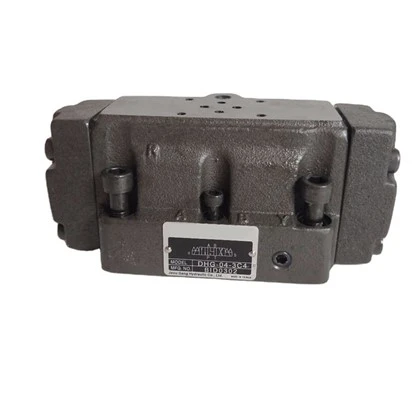
First, let’s start with the basics of how a reverse osmosis (RO) desalination plant works—since that’s where 70% of the world’s desalinated water is produced today, and where PMP Pumps play their most vital role. Desalination takes saltwater from oceans, bays, or brackish aquifers and removes the salt and minerals to make it safe for drinking, agriculture, or industrial use. The RO process relies on semipermeable membranes that let water molecules pass through but block salt, bacteria, and other contaminants. To push water against the natural osmotic pressure of saltwater, you need extremely high pressure—like 600 to 1,200 psi, depending on the salinity of the source water. That’s where PMP Pumps come in: they are the high-pressure pumps that generate and maintain this pressure so RO membranes can do their job.
But it’s not just about pressure. Desalination is an energy-intensive process—accounting for about 3% of global industrial electricity use, according to the International Desalination Association (IDA)—so efficiency is non-negotiable. Wasted energy means higher costs for operators and more environmental impact, two things we work tirelessly to reduce with our PMP Pumps. Our pumps are designed with precision-engineered impellers, custom seal systems, and variable speed drives that adjust output based on the plant’s current demand. If a sudden drop in saltwater flow reduces the need for pressure, the pump automatically slows down, cutting energy use by up to 20% compared to standard high-pressure pumps. That kind of efficiency doesn’t just save money for operators—it makes desalinated water more accessible to communities that need it most.
Let me walk you through a typical day in the life of a PMP Pump at a municipal desalination plant in the Middle East, where I’ve worked with clients on projects that supply water to millions of people. The plant starts its cycle at 5 a.m., when the first batch of saltwater is drawn from the Arabian Gulf. Before the water even reaches the RO membranes, it goes through pretreatment: screening to remove debris, filtration to catch sediment, and dosing with chemicals to prevent scaling and microbial growth. After pretreatment, the water enters the high-pressure section—and that’s where our PMP Pump takes over.
It pulls pre-treated water from the holding tank, pressurizes it to 850 psi (perfect for Gulf saltwater, which is slightly more saline than ocean water), and pushes it into a series of RO membrane modules. The clean water (called permeate) passes through the membranes and is sent for final treatment, while the concentrated saltwater (brine) is sent back out to sea. But here’s the thing: the PMP Pump doesn’t just run at full speed all day. During peak hours, when the city’s water demand is highest, the plant might run 12 pumps simultaneously to keep up. At night, when demand drops by 40%, the pump’s variable speed drive slows it down, so it’s not wasting energy pushing water faster than needed. This level of adaptability is why our pumps have become a staple in plants that operate 24/7, 365 days a year—no downtime, no missed deadlines for water delivery.
I’ve seen first-hand what happens when a high-pressure pump fails at a desalination plant. A few years ago, I was called to a small plant in Australia that serves a coastal town of 50,000 people. Their old pump was a generic model that couldn’t handle the harsh, sediment-heavy inlet water from the nearby estuary. It seized up mid-shift, shutting down the RO system for 12 hours. By the time repairs were done, the town had to ship in bottled water at a cost of over $200,000—not to mention the disruption to local hotels and restaurants. When they replaced it with a PMP Pump, they reported zero downtime in the three years since, even with the rough estuary water. That’s the value of a pump built specifically for desalination, not a one-size-fits-all industrial pump.
Why is PMP Pump different? It starts with our design focus on durability in corrosive environments. Saltwater is extremely harsh on metal components—standard steel pumps rust and degrade quickly, leading to leaks, reduced pressure, and frequent maintenance. Our pumps use high-grade, corrosion-resistant alloys like duplex stainless steel and super duplex stainless steel for all wetted parts (the parts that touch water). We also use mechanical seals that are engineered to handle high pressure without leaking, even when the pump is running for thousands of hours without a shutdown. I can’t tell you how many times a plant operator has told me that our pumps cut their maintenance time by 50% because they don’t have to replace seals or repair corrosion every six months. That’s not just a benefit—it’s a game-changer for operators who have to keep their plants running in remote areas, where spare parts and technicians are hard to come by.
Another critical role our PMP Pumps play is in energy recovery. Wait, you might be thinking—energy recovery is handled by separate devices, right? Well, yes, but the PMP Pump works in tandem with those devices to maximize efficiency. Many desalination plants use energy recovery devices (ERDs) that capture the pressure from the brine stream and use it to pre-pressurize incoming saltwater, reducing the load on the high-pressure pump. Our PMP Pumps are calibrated to work seamlessly with all major ERD models, from work exchangers to pressure exchangers. If the ERD needs a slight adjustment in flow or pressure, our pump’s variable speed drive can make real-time tweaks to keep the system balanced. This integration ensures that the plant’s overall energy efficiency stays at or above 45%—a benchmark set by the IDA as a standard for modern, sustainable desalination.
I also want to talk about the unsung role of PMP Pumps in supporting industrial desalination. Large factories, power plants, and mining operations often rely on desalination for process water—think of a power plant that needs water to cool its turbines, or a gold mine in the Atacama Desert that needs water to process ore. For these operations, downtime isn’t just an inconvenience—it can cost millions of dollars per hour. Our PMP Pumps are built with redundant features, meaning that even if one part of the pump has a minor issue, the system can switch to a backup mode without shutting down. A mining client in Chile told me that their old pump would force them to halt processing for 8 hours every quarter for maintenance. Since switching to our PMP Pump, they’ve only needed one 4-hour maintenance check a year, boosting their annual production by $12 million. That’s the kind of impact a reliable pump can have on a business’s bottom line.
Of course, no piece of industrial equipment is perfect, and we’re constantly innovating to make our PMP Pumps even better. Recently, we’ve added smart monitoring technology to our pumps—small sensors that track temperature, pressure, vibration, and energy use in real time. Operators can access this data remotely via a dashboard, so they can spot a potential issue (like a seal starting to leak or a bearing wearing out) weeks before it causes a failure. This predictive maintenance has cut our clients’ emergency repair costs by 70% and extended the lifespan of the pumps by an average of 5 years. For a desalination plant that expects pumps to last 15 to 20 years, this kind of technology is a huge investment in long-term reliability.
I’ve been supplying PMP Pumps for over a decade, and I’ve seen how the demand for desalination has grown from a niche solution to a global necessity. By 2030, the IDA projects that desalination capacity will double, as more regions face water scarcity due to climate change and population growth. As a supplier, we don’t just sell pumps—we partner with desalination operators to make sure they have the equipment they need to deliver safe, affordable water to communities around the world. That means listening to their specific challenges: whether they’re working in a hot, dusty environment, dealing with extremely saline water, or trying to meet strict energy efficiency targets. We don’t offer off-the-shelf pumps—we work with each client to customize a PMP Pump that fits their exact plant’s needs.
If you’re a desalination plant operator, project engineer, or someone responsible for keeping a desalination facility running smoothly, you know that every piece of equipment matters. But when it comes to the high-pressure pumps that are the heart of your RO system, you can’t afford to cut corners. A PMP Pump isn’t just a pump—it’s a reliable partner that keeps your plant running, reduces your costs, and ensures that fresh water gets to the people who need it.

If you’re ready to upgrade your desalination plant’s pump system, or if you have questions about how a PMP Pump can improve your efficiency and reliability, we’re here to help. Our team has decades of experience in the desalination industry, and we can work with you to design, supply, and support the perfect pump for your operations. Reach out to our team to start a conversation about your pumping needs—we’re ready to help keep your plant running for years to come.
SHIMADZU Pump References
International Desalination Association. (2024). Desalination Market Report 2023-2030.
American Water Works Association. (2022). Reverse Osmosis Desalination: Design and Operation.
Duplex Stainless Steel Manufacturers Association. (2023). Corrosion Resistance in Seawater Pump Applications.
U.S. Department of Energy. (2021). Energy Efficiency in Desalination Technologies.
Fujian Zhenyuan Hydraulic Equipment Co., Ltd.
Fujian Zhenyuan Hydraulic Equipment Co., Ltd. is well-known as one of the leading pmp pump manufacturers and suppliers in China. If you’re going to wholesale pmp pump in stock, welcome to get quotation from our factory. All customized products are with high quality and low price.
Address: No. 125, Wuli Industrial Zone, Jinjiang, Quanzhou City, Fujian Province
E-mail: yexun@fjzhenyuan.com
WebSite: https://www.zhenyuanhydraulic.com/
