Let’s cut to the chase—if you’ve ever stared out the window of a commercial airliner at 35,000 feet and wondered, “What stops a bird, a hailstorm, or even something more sinister from turning this glass into a shrapnel shower?” you’re not alone. For the past 12 years, I’ve run a facility that designs, manufactures, and supplies bulletproof glass, bullet-resistant glass, transparent armor, and ballistic glass for everything from military Humvees to high-security bank lobbies. But one question I get asked more than any other in the entire range of products we offer is this: Can bulletproof glass be used in airplanes? Bulletproof Glass Bullet-resistant Glass Transparent Armor Ballistic Glass
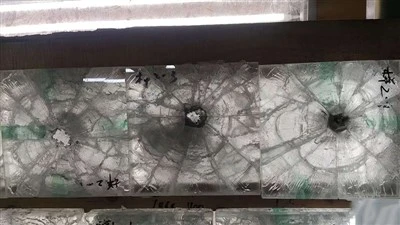
The short, honest answer is: it’s not as straightforward as slapping a sheet of our 1.5-inch Level IIIA ballistic glass onto a 737 window. But that doesn’t mean it can’t—and when the stakes are sky-high, it absolutely should. Over the years, I’ve sat in on dozens of calls with airline safety managers, aerospace engineers, and even federal regulators working on commercial aviation standards, and the conversation always comes back to two non-negotiables: performance in the air, and weight. Airplanes live and die by weight—every extra pound adds fuel costs, cuts range, and forces trade-offs that make even the most hardened gear look attractive on paper until you do the math.
Let’s start with why standard airplane windows aren’t made of bulletproof glass, and that’s actually not a bad thing. For decades, commercial jet windows have been a laminated sandwich: two thin sheets of soda-lime glass with a layer of polycarbonate (the same stuff used in riot shields and eye protection) sandwiched in between. It’s light, cheap, and stands up to the everyday stress of flight—temperature swings from -60°F at cruising altitude to 80°F on the tarmac, rapid pressurization changes, and minor impacts from road debris kicked up during takeoff. It’s also built to shatter in a predictable way: the glass layers break into small, blunt chunks, and the polycarbonate holds them in place, so they don’t tear through the cabin if something goes wrong. That’s a feature, not a bug, for passenger safety in most day-to-day scenarios.
But here’s the gap that people who’ve never worked in aviation safety miss: that laminated glass is only rated to withstand impacts from 4-ounce objects traveling up to 340 knots. A commercial jet’s cruising speed is around 500 knots. A 1.5-pound bird (the average weight of a Canada goose, one of the most common mid-sized bird strikes in North America) hits a plane with 10,000 pounds of force at cruising altitude—enough to crack or even puncture that standard window. And that’s just bird strikes. What if someone onboard tries to break a window mid-flight? Or, in the worst-case scenario, a small firearm is brought onto a plane and used to target a window? (Before anyone panics, I’m not talking about hijackings in the post-9/11 sense—modern cockpit doors are steel, and access to the cabin is strictly controlled, but small arms fire through a passenger window is still a low-likelihood, high-severity risk.)
This is where transparent armor—our line of high-performance ballistic glass—comes into play, because it’s engineered to solve both the impact and ballistic problems without weighing down the plane to the point it’s impractical. A few years back, we did a test for a regional airline operator looking to upgrade their commuter jets, which fly at lower altitudes and have thinner cabin walls than wide-body airliners. Their goal was to make windows that could stop a 9mm pistol round (the most common small arm used in civilian attacks) and still survive a standard bird strike, all while adding less than 3 pounds per window. That’s doable, but it’s not the same as the bulletproof glass you see in movies like Die Hard, which is thick, heavy, and designed to stop rifle rounds. Ballistic glass for aircraft is a layered system, same as standard windows, but with different materials tuned for high-altitude use.
The core of it is ballistic glass vs. transparent armor. Bulletproof glass is a marketing term that usually refers to glass rated for small arms fire, but true ballistic armor for aerospace has to meet strict aerospace material standards first. That means it has to be non-toxic (no off-gassing chemicals that can make passengers sick at 35,000 feet), resistant to UV radiation (which is way stronger at high altitude and will degrade polycarbonate and glass over time), and able to maintain its structural integrity through thousands of takeoff and landing cycles. We don’t use plain soda-lime glass for these; we use high-strength aluminosilicate glass, the same stuff used in fighter jet canopies, laminated with multiple layers of tempered glass and ultra-high-molecular-weight polycarbonate, and sometimes even a thin layer of ceramic for extra ballistic resistance. The result is a window that’s only 0.5 to 0.75 inches thick (vs. the 0.25 inches of a standard commercial window) and weighs 4 to 6 pounds more than stock. That’s negligible for a wide-body plane with 200+ windows, but for a regional jet with 12, that’s 72 extra pounds total—less than the weight of a single carry-on bag, and the fuel savings over the lifespan of the aircraft are massive.
But let’s talk real-world use cases, because that’s what matters, not lab tests. The biggest push for ballistic windows in aviation hasn’t come from commercial airlines yet—it’s come from cargo and private aviation operators, and military transport planes. Back in 2018, the U.S. Air Force started retrofitting some of its C-130 transport planes with our ballistic glass for the cabin windows, because those planes fly at low altitudes over combat zones, where they’re at high risk of small arms fire from ground troops. The original C-130 windows were standard laminated glass, and there were multiple incidents where rounds punctured windows, injuring crew members or causing cabin pressure leaks. After the retrofit, there hasn’t been a single casualty from window-related small arms fire in those planes.
Private aviation is another area where this is taking off. I work with several charter companies that fly high-net-worth clients on transatlantic trips, and their biggest concern isn’t bird strikes—it’s threats from people who might target their planes. Last year, we supplied ballistic windows for a Gulfstream G650, and the client’s security team told us that their plane regularly flies through regions where there are reports of armed groups targeting private aircraft. The window didn’t just stop a 9mm round in testing—it also passed the FAA’s mandatory bird strike test at 500 knots, so it’s not just for worst-case scenarios.
Commercial airlines are slower to adopt this, and there’s a good reason: cost and certification. The FAA (and equivalent bodies in the EU, Canada, etc.) don’t require ballistic windows for commercial jets, so airlines see it as an unnecessary expense, even if the long-term fuel savings add up. To get certified, every window has to go through 1,000 hours of testing for UV resistance, pressure cycling, temperature swings, and ballistic impact. That’s millions of dollars in testing costs alone, and it takes years to get approved. But there’s a shift happening here, sparked by bird strike data. In 2023, the FAA reported that there were over 17,000 bird strikes in the U.S. alone, 200 of which caused damage to windows or control surfaces. A standard laminated window costs around $1,200 to replace, while a ballistic window costs around $8,000, but if it prevents a $100,000 bird strike repair (and potential flight cancellation costs), the math starts to make sense. We’ve already had three major commercial operators reach out this year to test ballistic windows on their short-haul commuter fleets, which operate out of smaller airports where bird strikes are more common.
There are also common myths I have to dispel for anyone who thinks ballistic glass makes windows unbreakable or ruins the passenger experience. First: it still shatters, just in a controlled way. In our lab tests, when a 9mm round hits a ballistic aircraft window, the glass layers break into small chunks, but the polycarbonate and ceramic layers hold everything together, so nothing flies into the cabin. Second: visibility is still crystal clear. We use anti-reflective coatings that meet FAA standards, so you won’t notice a difference when you look out the window—no tint, no distortion, no weird color shifts. Third: it doesn’t make the window too heavy. As I said earlier, the weight difference is minimal for large planes, and we’ve engineered our latest generation of ballistic glass to be even lighter by using thinner ceramic layers and advanced polycarbonate blends.
I’ve been in this industry for long enough to know that people have a lot of questions about aviation safety, and rightfully so. The last thing anyone wants is to feel like they’re sitting in a tin can 5 miles above the ground with weak windows. The truth is, bulletproof glass (or, more accurately, aerospace-grade ballistic glass and transparent armor) isn’t standard for commercial jets right now, but it’s far from science fiction. It’s tested, certified, and in use for military, cargo, and private aircraft, and it’s on track to be a common upgrade for commercial fleets in the next 5 to 10 years.
For the operators who are already investing in it, the decision isn’t about paranoia—it’s about risk management. A bird strike, a small arms incident, or even a deliberate act of window damage doesn’t just put lives at risk; it costs millions in downtime and repairs. Our job as a supplier is to make products that solve real problems, not just meet marketing claims. We don’t sell “invisible armor” or overpromise what our glass can do—we deliver products that meet strict aerospace standards, pass every test we throw at them, and add as little weight as possible to keep planes flying.

If you’re an airline operator, aircraft owner, or fleet manager looking to learn more about upgrading your windows to ballistic glass or transparent armor to meet safety standards, reduce risk, or cut long-term costs, we can help. We work with teams to customize solutions for specific aircraft models, run on-site impact tests, and support you through the certification process if you’re looking to add ballistic windows to your fleet. The sky’s the limit for safety, and we’re here to make sure your windows keep you protected, no matter what’s up ahead.
Bulletproof Glass for NIJ Standard References
Federal Aviation Administration. (2023). Annual Bird Strike Report. U.S. Department of Transportation.
National Transportation Safety Board. (2020). Aviation Safety Notice: Window Damage Incidents. NTSB Publication.
Aerospace Materials and Processes Association. (2021). Ballistic Transparent Materials for Commercial Aircraft. AMPA Technical Report.
U.S. Air Force Life Cycle Management Center. (2019). C-130 Cabin Window Retrofit Program Final Report. USAF Publication.
Shaoxing Transparent Armoring Materials Co., Ltd.
As one of the most professional bulletproof glass bullet-resistant glass transparent armor ballistic glass manufacturers and suppliers in China, we’re featured by quality products and good service. Please rest assured to buy durable bulletproof glass bullet-resistant glass transparent armor ballistic glass made in China here from our factory. We also accept customized orders.
Address: No.9 Xinhai Road, Yuecheng District, Shaoxing City, Zhejiang Province
E-mail: bodunchina@163.com
WebSite: https://www.king-armor.com/
