Silicone O rings are widely recognized in various industries for their flexibility, heat resistance, and excellent sealing properties. As a seasoned silicone O ring supplier, one question I frequently encounter from clients is whether silicone O rings can be used in refrigeration systems. In this blog, I’ll delve into the technicalities to provide a comprehensive answer to this query. Silicone O Ring
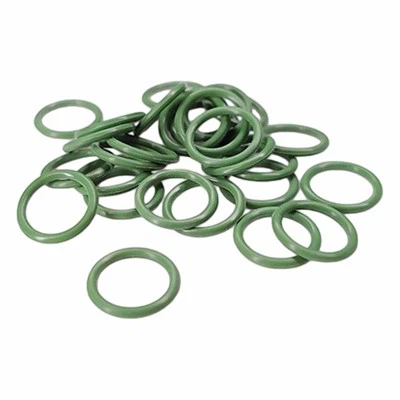
Properties of Silicone O Rings
Silicone O rings are made from a polymer material composed of silicon, oxygen, and various other elements. Their unique chemical structure endows them with several remarkable characteristics.
First, silicone O rings exhibit outstanding thermal stability. They can withstand a wide range of temperatures, typically from -60°C to 230°C, depending on the specific formulation. This property makes them suitable for applications where temperature fluctuations are common. Second, they have excellent flexibility and elasticity, which enables them to form a tight seal even under irregular surface conditions. This flexibility also reduces the risk of damage during installation or operation. Another advantage of silicone O rings is their resistance to ozone, UV radiation, and many chemicals. This resistance makes them durable in harsh environments, extending their service life.
Requirements of Refrigeration Systems
Refrigeration systems operate under specific conditions that demand high – performance sealing components. These systems typically involve the circulation of refrigerants, which are substances used to transfer heat. Common refrigerants include hydrofluorocarbons (HFCs), hydrochlorofluorocarbons (HCFCs), and natural refrigerants such as ammonia and carbon dioxide.
One of the primary requirements for O rings in refrigeration systems is chemical compatibility. The O rings must not react with the refrigerant or lubricants used in the system. Any chemical reaction could lead to swelling, hardening, or degradation of the O ring, which would compromise the sealing performance and potentially cause system failures.
Temperature resistance is also crucial. Refrigeration systems can experience extremely low temperatures during the cooling process and relatively high temperatures in the compressor area. The O rings need to maintain their physical properties and sealing effectiveness across this wide temperature range.
In addition, the O rings should have good mechanical strength to withstand the pressure differentials within the system. The pressure in refrigeration systems can vary significantly, and the O rings must be able to resist deformation and leakage under these pressure changes.
Compatibility of Silicone O Rings with Refrigerants
When it comes to the compatibility of silicone O rings with refrigerants, it is a complex issue that depends on the type of refrigerant used.
For some common HFC refrigerants, such as R – 134a, silicone O rings generally have good chemical compatibility. R – 134a is a widely used refrigerant in automotive and domestic refrigeration systems. Silicone O rings can maintain their shape and sealing performance when in contact with this refrigerant over a long period. However, it is important to note that the presence of lubricants in the system can affect the compatibility. Some lubricants may contain additives that can cause minor swelling or changes in the physical properties of silicone O rings.
HCFC refrigerants, like R – 22, were once more commonly used but are being phased out due to their ozone – depleting potential. Silicone O rings can also be used with R – 22, but similar to the case with HFCs, the interaction with lubricants needs to be carefully considered.
Natural refrigerants present different challenges. Ammonia is a highly reactive substance, and silicone O rings are generally not recommended for use with ammonia – based refrigeration systems. Ammonia can cause significant chemical damage to silicone, leading to rapid degradation of the O ring. Carbon dioxide, on the other hand, is a more inert refrigerant. Silicone O rings can be used in some low – pressure carbon dioxide refrigeration systems, but they may not be suitable for high – pressure applications due to their relatively low mechanical strength compared to some other materials.
Temperature and Pressure Considerations
The temperature range in refrigeration systems can vary greatly. In the evaporator section, temperatures can drop to well below freezing, while in the compressor area, they can rise significantly. Silicone O rings have a relatively good low – temperature flexibility compared to some other elastomers. They can maintain their sealing properties at low temperatures, which is an important advantage.
However, at high temperatures, silicone O rings may experience some softening, especially if they are close to their upper – temperature limit. This softening can reduce their mechanical strength and potentially lead to leakage. In high – pressure refrigeration systems, the softening effect can be more pronounced, as the pressure can further deform the O ring.
For applications where high pressures are involved, such as industrial refrigeration systems, special – grade silicone O rings with enhanced mechanical properties may be required. These O rings are typically formulated with additives to improve their strength and resistance to deformation under pressure.
Advantages of Using Silicone O Rings in Refrigeration Systems
Despite the challenges, there are several advantages to using silicone O rings in refrigeration systems.
One of the key benefits is their excellent sealing performance. The flexibility and elasticity of silicone allow it to adapt to various surface irregularities, ensuring a tight seal. This reduces the risk of refrigerant leakage, which is not only important for the efficient operation of the system but also for environmental reasons, as refrigerant leakage can contribute to global warming.
Silicone O rings also have a long service life. Their resistance to ozone, UV radiation, and many chemicals means that they can withstand the harsh conditions in refrigeration systems for an extended period. This reduces the need for frequent replacement, which can save both time and money in the long run.
In addition, silicone O rings are relatively easy to install. Their soft and flexible nature makes them suitable for use in applications where the installation space is limited or the components are difficult to access.
Limitations and Precautions
While silicone O rings have many advantages, there are also some limitations and precautions to be aware of.
As mentioned earlier, their chemical compatibility with certain refrigerants may be an issue. Before using silicone O rings in a refrigeration system, it is essential to confirm their compatibility with the specific refrigerant and lubricant used. This can be done through laboratory testing or by consulting with a materials expert.
The relatively low mechanical strength of silicone O rings compared to some other materials can be a drawback in high – pressure applications. In such cases, alternative materials such as nitrile rubber or fluorocarbon rubber may be more suitable.
Another consideration is the potential for outgassing. Silicone materials can release small amounts of volatile compounds over time, which may be a concern in some sensitive refrigeration applications, such as in pharmaceutical or food – processing industries.
Conclusion

In conclusion, silicone O rings can be used in refrigeration systems under certain conditions. Their excellent thermal stability, flexibility, and sealing properties make them a viable option for many applications. However, careful consideration must be given to the compatibility with refrigerants and lubricants, as well as the temperature and pressure requirements of the system.
Rubber Feet As a silicone O ring supplier, I am dedicated to providing high – quality products and expert advice to our customers. If you are considering using silicone O rings in your refrigeration system or have any questions about our products, please don’t hesitate to contact us for procurement discussions. We can work together to find the most suitable solution for your specific needs.
References
- Dow Corning Silicone Elastomers Handbook
- ASHRAE Handbook: Refrigeration
- Rubber Manufacturers Association (RMA) Standards for Elastomers in Refrigeration Applications
Haining Chaoyue Seals Co., Ltd.
As one of the most professional silicone o ring manufacturers and suppliers in China, we offer a wide range of products with superior quality. Please feel free to wholesale high quality silicone o ring made in China here from our factory. Also, custom service is available.
Address: Building 9, 158 Lianhong Road, Yuanhua Town, Jiaxing, Zhejiang, China.
E-mail: chaoyue@cyseals.com
WebSite: https://www.hncyseal.com/
