Hey there! I’m a supplier of zinc labels, and today I wanna chat about something super important: the chemical resistance of zinc labels to different substances. Zinc Label
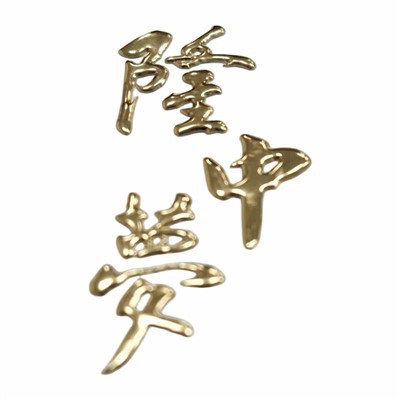
First off, let’s talk about what zinc labels are. Zinc labels are awesome little things. They’re made of zinc, a pretty common metal. These labels are used in all sorts of industries, like electronics, manufacturing, and even in some scientific labs. They’re great because they’re durable and can hold up well under normal conditions. But when it comes to different chemicals, things can get a bit tricky.
Resistance to Acids
Let’s start with acids. Acids are substances that have a pH lower than 7, and they can be pretty corrosive. When it comes to zinc labels, their reaction to acids depends on the type and concentration of the acid.
Take hydrochloric acid (HCl) for example. Hydrochloric acid is a strong acid, and if a zinc label is exposed to concentrated HCl, it’s gonna react pretty quickly. Zinc reacts with hydrochloric acid to form zinc chloride (ZnCl₂) and hydrogen gas (H₂). The chemical equation for this reaction is Zn + 2HCl → ZnCl₂+ H₂. This means that the zinc label will start to dissolve, and you’ll see bubbles forming as the hydrogen gas is released.
On the other hand, if the hydrochloric acid is very dilute, the reaction will be much slower. The zinc label might still corrode over time, but it won’t be as dramatic as with concentrated acid.
Another common acid is sulfuric acid (H₂SO₄). With concentrated sulfuric acid, zinc also reacts. The reaction produces zinc sulfate (ZnSO₄) and hydrogen gas. The equation is Zn + H₂SO₄→ ZnSO₄+ H₂. But concentrated sulfuric acid is also a dehydrating agent, so the reaction can be a bit more complex. In a less concentrated form, the reaction rate will decrease, and the zinc label will be more likely to withstand the acid for a longer period.
However, if we’re talking about weak acids like acetic acid (CH₃COOH), which is found in vinegar, the reaction is much less severe. Zinc labels can usually tolerate exposure to acetic acid for a while without significant damage. The acetic acid reacts with zinc to form zinc acetate (Zn(CH₃COO)₂) but at a much slower pace compared to strong acids.
Resistance to Bases
Now, let’s move on to bases. Bases have a pH higher than 7 and are also known as alkalis. Sodium hydroxide (NaOH) is a common strong base. When a zinc label is exposed to sodium hydroxide, it reacts to form sodium zincate (Na₂Zn(OH)₄) and hydrogen gas. The chemical equation is Zn + 2NaOH + 2H₂O → Na₂Zn(OH)₄+ H₂.
Similar to acids, the concentration of the base matters. Concentrated sodium hydroxide will cause the zinc label to corrode faster. In a more dilute solution, the reaction speed decreases, and the label can resist the base for a longer time.
Ammonia (NH₃) is a weak base. Zinc labels generally have better resistance to ammonia. The reaction between zinc and ammonia is slower and less likely to cause immediate damage. Ammonia can form complex compounds with zinc ions, but the overall effect on the zinc label is not as severe as with strong bases.
Resistance to Organic Solvents
Organic solvents are a different story. These are substances like acetone, ethanol, and toluene. Zinc labels are usually pretty resistant to many common organic solvents.
Acetone is a widely used solvent. It’s fast – evaporating and can dissolve many organic substances. But when it comes to zinc labels, acetone doesn’t have a strong chemical reaction with zinc. So, in most cases, a zinc label will remain intact when exposed to acetone.
Ethanol, the alcohol found in alcoholic beverages (in a different, more purified form), is also relatively harmless to zinc labels. It doesn’t react strongly with zinc and is often used in cleaning solutions that can be used on zinc labels without causing damage.
Toluene is an aromatic hydrocarbon solvent. It’s used in paints, adhesives, and some industrial processes. Zinc labels can usually withstand short – term exposure to toluene without any major issues. However, long – term or repeated exposure in a high – concentration environment might cause some surface changes, but it’s still not as destructive as acids or strong bases.
Resistance to Salts
Salts are ionic compounds formed from the reaction of an acid and a base. Common salts include sodium chloride (NaCl), which is table salt. When zinc labels are exposed to salt solutions, the main concern is corrosion due to the presence of ions.
In a sodium chloride solution, especially in the presence of moisture and oxygen, zinc can undergo a corrosion process called galvanic corrosion. The chlorine ions in the sodium chloride can accelerate the oxidation of zinc. The zinc reacts with oxygen in the air to form zinc oxide (ZnO), and the salt solution helps to carry the ions and speed up the reaction.
However, if the salt solution is very dilute and the exposure time is short, the corrosion can be minimized. Zinc has some natural protective properties, and a thin layer of zinc oxide can form on the surface, which can slow down further corrosion in some cases.
Importance of Chemical Resistance
The chemical resistance of zinc labels is super important in many industries. For example, in the electronics industry, zinc labels might be used on circuit boards. If they aren’t resistant to the chemicals used in the manufacturing process, like cleaning agents or fluxes, they could get damaged and lose their legibility.
In the manufacturing industry, where products are often exposed to various chemicals during production, storage, and transportation, zinc labels need to be able to withstand these substances. If a label gets corroded, it can lead to misidentification of products, which can cause all sorts of problems.
Even in scientific labs, where accuracy is key, zinc labels need to resist chemicals. For example, if a label on a test tube or a container gets damaged by the chemicals inside, it can lead to confusion and incorrect data analysis.
How We Ensure Quality
As a zinc label supplier, we take chemical resistance very seriously. We conduct a bunch of tests on our zinc labels to make sure they can stand up to different substances. We expose sample labels to various acids, bases, organic solvents, and salts to see how they react.
We also use different coatings on our zinc labels to enhance their chemical resistance. These coatings can act as a barrier between the zinc and the chemicals. For example, we might use a polymer coating that is resistant to acids and bases. This coating can extend the lifespan of the label when it’s exposed to harsh chemical environments.
Another thing we do is offer custom – made labels. If a customer has a specific chemical environment in mind, we can work with them to develop a label that has the right level of chemical resistance.
Time to Talk Business
Aluminum Label If you’re in need of high – quality zinc labels that can withstand different chemicals, I’d love to have a chat with you. Whether you’re in the electronics, manufacturing, or any other industry, we’ve got the expertise to provide you with the best zinc labels for your needs. Just reach out and let’s start a conversation about your requirements.
References
- Chemistry textbooks on inorganic chemistry, which cover the reactions of metals with acids, bases, and other substances.
- Industrial material research reports on the corrosion resistance of metals, especially zinc.
Guizhou Mingguan Sign Nameplate Products Co., Ltd.
We’re well-known as one of the leading zinc label manufacturers and suppliers in China. With abundant experience, we warmly welcome you to wholesale bulk customized zinc label at low price from our factory. For quotation and free sample, contact us now.
Address: Xinpu New District, Zunyi City, Guizhou Province of China
E-mail: zhangyixuanmglabel@126.com
WebSite: https://www.mingguan-label.com/
