When I’m on the shop floor, walking past the forging presses and quality control stations, I hear a lot of questions from our clients—especially those who are new to specifying industrial valves: “What do those tiny stamped marks actually mean on a forged valve? How do I know they’re right, not just someone scribbling on a part to check a box?” As a forged valve supplier who’s been in this business for 18 years, I’ll tell you straight: valve markings aren’t random. They’re a universal language built to keep pipelines, refineries, power plants, and even chemical processing facilities safe. Skip the standard, and you’re not just mislabeling a part—you’re creating a risk that can shut down a whole operation, or worse. Forged Valves
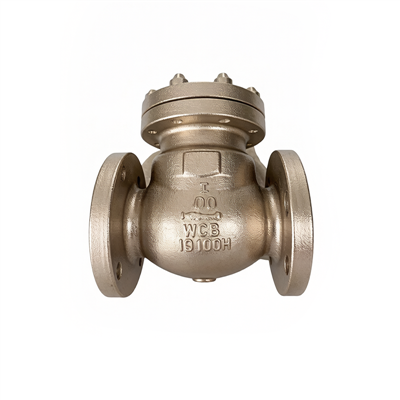
Let’s start with the core standards that govern these markings, because that’s where the confusion usually starts. Most of our clients reference two main bodies when they ask about standards: the American National Standards Institute (ANSI) and the American Society of Mechanical Engineers (ASME), specifically ASME B16.34. That’s not a coincidence—ASME B16.34 is the global baseline for forged valve markings, outlining exactly what needs to be stamped, where, and how it should look. There’s also API 607 for fire-safe valves, ISO 5208 for pressure testing, and regional standards like BS 6364 for the UK, but 90% of the valves we supply adhere to ANSI/ASME because that’s what most North American and international energy, chemical, and power sectors require.
I won’t bore you with a wall of text of every clause, but let’s break down what a proper forged valve marking includes, because that’s the standard in action. First, the valve size—forged valves have nominal pipe size (NPS) stamped clearly, usually on the valve body or end connection. For example, a 2-inch forged gate valve will have “2” sharp-stamped, not printed on a sticker. Then there’s the pressure class—like 150, 300, 600, or 900, paired with the material grade. If it’s a Class 300 A105 forged valve, you’ll see both “300” and “A105” together. Material grade is non-negotiable here: if someone’s marking “304 SS” on a valve that’s actually cast, that’s a red flag. We test every forging lot for material composition before we stamp, so our markings match the actual material, not a guess.
Next comes the valve type and manufacturer’s identity. The type—gate, globe, ball, check—needs to be clear, usually abbreviated: “G” for globe, “B” for ball, “GC” for gate. Then your brand or manufacturer ID, which is a registered mark. We stamp our unique manufacturer ID right after the material and class, so a client can trace every valve back to our forging lot, heat number, and test records. That heat number is another key standard requirement: every forged valve has a unique heat number linked to the steel batch it came from. That’s how you track a defective part all the way back to the mill that made the raw steel. If a valve doesn’t have a heat number, it’s not actually forged—probably cast, and you should walk away.
Wait, there’s more, depending on the valve’s purpose. For fire-safe valves—used in refineries where leaks can catch fire—API 607 requires an additional fire-safe symbol stamped on the body. For cryogenic valves, there’s a “LO” mark, meaning suitable for low temperatures. For valves that have undergone hydrostatic testing (which all our valves do, per ASME B16.34), you’ll sometimes see a test pressure mark, though many times the test is documented in our QC certificates instead. The rules also say markings can’t be raised too high, or too shallow—they need to be durable enough to stay legible after years of exposure to high pressure, temperature, and corrosive materials. No stickers, no paint, no hand-stamped marks that rub off after a few uses.
I’ve seen too many clients cut corners when it comes to markings. A few years back, we had a client come to us with a batch of forged gate valves they’d bought from a third-party supplier, all stamped with a 600 class mark. When we ran a pressure test on a sample, it blew apart at half the rated pressure. Turns out the supplier had stamped the 600 mark on Class 150 valves, just to charge more. The heat numbers were faked too—they didn’t match any steel mill records. That client ended up having to shut down a pipeline for three days to replace all the valves, costing them over $2 million in downtime. That’s the risk of ignoring the marking standards.
So what are the red flags to watch for when checking forged valve markings? Let’s list them out from my years on the job: First, markings that are faded, rubbed off, or look like they were added after manufacturing. A proper forged valve’s markings are stamped into the body during the forging process, not applied later. Second, missing heat numbers or material grades. If a valve only has a size and class, no heat number, it’s not traceable. Third, abbreviations that don’t match the standard—like “SS” instead of a specific grade like 316 SS, which is a big difference in corrosion resistance. Fourth, mismatched markings across a batch. If one valve has a heat number that starts with H123 and another from the same order has H456 from a completely different mill, that’s a sign of mixed parts.
Now, I know what some of you are thinking: “What if I’m using a non-standard valve for a specialized project?” That’s fine, but even specialized valves need to adhere to the core standards. We supply custom forged valves for things like offshore rigs and aerospace, and we still stamp the required ANSI/ASME core info, plus any additional project-specific markings the client requests. The only exception I’ve ever seen is a very small custom part, but even then, we make sure the markings are clear enough to trace for safety.
Here’s the thing about working with a reputable forged valve supplier: we don’t just stamp the marks and call it good. We keep a complete paper trail for every valve that leaves our shop, including material test reports, heat numbers, pressure test results, and certification that all markings match ASME B16.34. When a client gets a shipment from us, they can pull up any valve’s details in 10 minutes, just by looking at the stamped heat number. That’s the standard we operate by, because we know a valve’s marking isn’t just a label—it’s a promise that it will perform when it matters most.
If you’re specifying forged valves for your next project, don’t take chances on unmarked or incorrectly marked parts. The standards for valve markings exist to protect your operations, your team, and your bottom line. We’ve been in this business long enough to know that cutting corners on markings always ends up costing more in the long run. We can help you source the right forged valves, verify all markings meet the required standards, and provide all the certification you need for your inspection teams. Reach out to our team to discuss your valve requirements, and we’ll make sure every part you get is stamped correctly, traced properly, and ready to perform.
Butterfly Valve Reference: ASME B16.34, Valves—Flanged, Threaded, and Welding End, American Society of Mechanical Engineers, New York. API 607, Fire Test for Soft-Seated Quarter-Turn Valves, American Petroleum Institute, Washington, D.C. ISO 5208, Industrial Valves—Pressure Testing of Valves, International Organization for Standardization, Geneva.
Xiongxiang Valve Group Co., Ltd.
As one of the most professional forged valves manufacturers and suppliers in China, we’re featured by quality products and good price. Please rest assured to wholesale cheap forged valves for sale here from our factory. Contact us for more details.
Address: Building 1, No.306, 12th Binhai Road, Jinkai District, Wenzhou City, Zhejiang Province, China
E-mail: info@xiongxiangvalve.com.cn
WebSite: https://www.steelvalvegroup.com/
