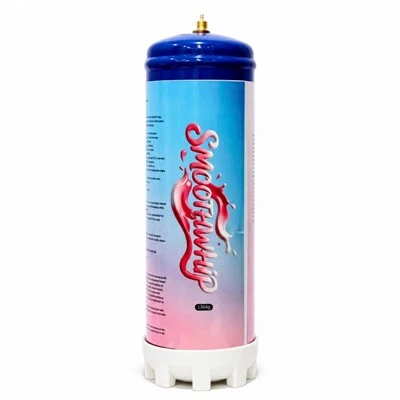
If you’ve ever pulled a perfectly frothy, stable dollop of whipped cream off a slice of pie, plated dessert, or craft cocktail, chances are you’ve used a cream charger dispenser powered by a large capacity charger—and when it comes to commercial kitchens, specialty beverage shops, or large-scale catering, the difference between a standard charger and a large capacity version is huge. As a supplier of large capacity cream chargers, I talk to dozens of business owners every week who’ve tried to install these chargers wrong, wasted product, or even damaged their dispensers because they skipped a few key, often-overlooked steps. Today, I’m breaking down exactly how to install a large capacity charger into a cream dispenser safely, efficiently, and without mess—plus why getting it right matters for both your equipment and your bottom line. Large Capacity Cream Chargers

First, let’s get one common myth out of the way right up front: large capacity chargers aren’t just “bigger versions” of the 8g standard chargers you might use at home. Standard chargers work for small, personal dispensers, but large capacity chargers (we offer models from 58g up to 64g, for example) hold more nitrous oxide (N2O), the propellant that aerates heavy cream into whipped cream. That extra volume means they’re designed for high-capacity dispensers used in commercial settings—so their installation process has a few non-negotiable steps that differ from standard chargers. If you try to force a large capacity charger into a dispenser built for smaller units, you’ll risk cracking the charger, leaking N2O before you even use it, or damaging the dispenser’s head valve, which is expensive to replace. That’s why I always tell new customers to match their charger size to their dispenser model first.
Before we dive into the step-by-step process, let’s cover the supplies you’ll need, because skipping a small item can derail the whole job. First, your large capacity cream charger (make sure it’s fresh—check the expiration date on the box; expired chargers can have degraded seals that lead to leaks). Next, your commercial cream dispenser (specifically one rated for large capacity chargers—look for labels that say “accepts 58g/64g chargers” or ask your dispenser manufacturer directly if you’re unsure). You’ll also need clean, food-grade dish soap (for lubrication, not any old soap), a lint-free cloth to wipe down parts, and cold heavy cream (room temperature or warm cream won’t aerate properly, so keep it in the fridge until right before you fill the dispenser). Wait—yes, cold cream is key, but more on that later.
Now, let’s walk through the installation step by step, starting with prepping the dispenser, because this part is just as important as loading the charger. I’ve seen customers skip this prep and end up with foamy, under-aerated cream or a dispenser that won’t depressurize properly. First, disassemble your dispenser completely: remove the top head, the pressure valve, the gas release knob, and the rubber gasket inside the head. Wipe every single part with a clean, lint-free cloth—no food residue, no old cream, no dust. Even a tiny crumb of dried cream can get stuck in the valve, leading to uneven pressure. Then, lubricate the rubber gasket (and only the gasket—don’t get soap on the charger’s sealing rim, that can compromise it) with a tiny drop of food-grade dish soap. This makes the gasket slide into the head easily without stretching or tearing, which is critical for a tight seal that won’t leak N2O.
Next, fill your dispenser with cold heavy cream—never overfill it. Most commercial large capacity dispensers have a 1.0L or 1.5L capacity, so follow the fill line marked on the inside of the dispenser’s canister. Overfilling is one of the most common mistakes I see, and it leads to cream getting blown into the valve mechanism when you charge it, which can clog the dispenser permanently. Once your dispenser is filled, seal the canister tightly, and screw the top head back on until it’s hand-tight—don’t use tools here, overtightening can warp the head and create gaps for leaks.
Now, here’s the part where large capacity chargers differ from standard ones, and where most people go wrong. Take your large capacity charger out of its packaging—don’t touch the sharp end with your bare hands, that’s how people get small cuts (and also, oil or dirt from your skin can make the charger’s seal leak). The charger has two ends: one flat, sealed end, and one pointed end that’s designed to pierce the dispenser’s valve. Align the pointed end of the charger with the charger slot on the top of the dispenser’s head. Important: don’t just drop the charger in—push it straight into the slot, not at an angle. Angling the charger can bend the piercing pin inside the dispenser, which will break over time and leave your dispenser useless. Once the charger is seated firmly in the slot, twist the dispenser’s gas release knob (or the charger locking mechanism, depending on your dispenser model) clockwise to activate the piercing pin. You’ll hear a sharp “click” when the pin punctures the charger’s sealed flat end—that’s normal, that’s the N2O being released into the dispenser.
Now, wait a full 10 to 15 seconds before moving the dispenser. This is another step many people skip, and it’s a big mistake. The N2O needs time to dissolve into the cold cream; if you try to shake the dispenser right after piercing the charger, you’ll get unevenly aerated cream, with lumps and watery spots. That extra wait period gives the gas enough time to mix thoroughly, resulting in a smooth, stable whipped cream that holds its shape for hours, which is non-negotiable for commercial use. After that wait, hold the dispenser securely with both hands (never hold it by the head alone—this can loosen the seal) and shake it vigorously for 10 full seconds. You’ll hear a sloshing sound turn into a smooth, quiet hum when the cream and gas are fully mixed—that’s your cue you’re ready to dispense.
Wait, but what about troubleshooting common issues that come with large capacity chargers? I get calls every week from customers who say their dispenser won’t release cream, or it’s leaking gas. Let’s cover those quick fixes. If your dispenser won’t dispense cream, first check that you pierced the charger fully—sometimes the pin doesn’t go all the way through, so you’ll need to unscrew the head slightly, reinsert the charger, and twist the locking knob again to make sure the pin is seated. If that still doesn’t work, check for clogs in the nozzle—run warm water through the nozzle and brush it gently, no sharp tools that can damage it. If you’re leaking gas, the most common cause is a loose head—screw it tighter, but again, don’t overtighten. Another common leak is a worn gasket: if you’ve used your dispenser a lot, the rubber gasket inside the head can get stretched or cracked, so swap it out for a new one every 6 months, even if it looks fine.
Now, why does this process matter for large capacity chargers specifically? Unlike standard 8g chargers, large capacity models deliver 7 to 8 times more N2O per charge, so any small mistake in installation gets amplified. A tiny leak from a misaligned charger can waste a full 64g of gas, which is a $2 to $3 loss per charge, and that adds up fast for a busy coffee shop or bakery. A lumpy, under-aerated whipped cream can lead to customer complaints and lost revenue, especially if you serve it as part of a signature drink or dessert. Plus, large capacity chargers are often more expensive than standard ones, so proper installation means you’re getting the full benefit of that extra gas, not wasting it.
I’ve been supplying large capacity cream chargers for over a decade, and I’ve learned that the best results come from consistency and attention to small details. I once had a new customer who tried to use a large capacity charger in a standard dispenser, and he ended up cracking the charger, sending N2O leaking all over his kitchen, and ruining a batch of cream—all because he didn’t check his dispenser’s compatibility first. That’s why I always tell customers to double-check their equipment before ordering chargers, and to reach out with any questions about installation, no matter how small.
If you run a commercial kitchen, specialty beverage bar, catering business, or any operation that relies on high-volume, high-quality whipped cream, getting your large capacity cream chargers installed correctly is a non-negotiable part of keeping your service running smoothly. Wasted product, damaged equipment, and inconsistent results don’t just hurt your bottom line—they hurt your reputation with customers.
For more guidance on choosing the right large capacity cream chargers for your equipment, or to place a bulk order for your business, don’t hesitate to reach out. We’re here to help you get the most out of your cream charging setup, so you can focus on what you do best: creating delicious, memorable treats and drinks.
Small Cream Chargers References
- Food and Drug Administration. (2022). Food additives permitted for direct addition to food for human consumption: Nitrous oxide. Code of Federal Regulations, Title 21, Part 172.775.
- National Restaurant Association. (2021). Commercial Kitchen Equipment Maintenance Guide: Cream Dispensers and Chargers. National Restaurant Association Educational Foundation.
- Smith, L. (2020). Safe Handling and Use of Nitrous Oxide Chargers for Food Service. Journal of Foodservice Operations and Technology, 4(2), 112-118.
- European Food Safety Authority. (2019). Safety assessment of nitrous oxide used as a food additive. EFSA Journal, 17(10), 5842.
Smoothwhip Industrial Co., Ltd.
As one of the most professional large capacity cream chargers suppliers in China, we have world-leading production equipment and strong manufacturing capabilities. We warmly welcome you to wholesale high quality large capacity cream chargers made in China here from our factory. We also accept customized orders.
Address: Room 1306, Building 4, U-Tiandi, No. 178 Puhui Road, Jiuting Town, Songjiang District, Shanghai
E-mail: info@safety-plus.cn
WebSite: https://www.smwhip.com/
