Hey everyone, and welcome back to the blog—today we’re talking about something I get asked all the time as an electric cargo tricycle cargo box supplier: can our cargo box actually move liquid goods? Let’s cut through the confusion here because this question comes up way more than you’d think, and honestly, it’s one of those things where the answer isn’t just a straight “yes” or “no”—it depends on a few key details. Electric Cargo Tricycle – Cargo Box
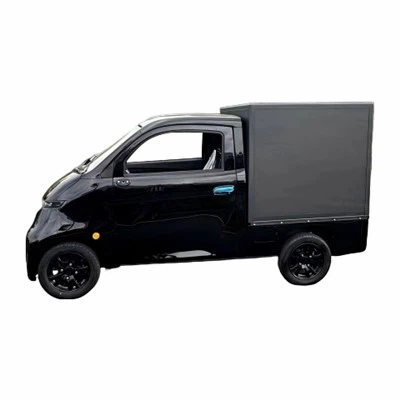
First off, let’s set the scene. If you’re a small business owner—say, a craft brewer delivering to local taprooms, a janitorial service hauling chemical cleaning supplies, or a farmer moving fresh milk to a creamery—you’ve probably stared at your local delivery options and thought, “Could this e-cargo trike actually do the job instead of my old gas van?” Gas vans are a pain—they’re pricey to fuel, hard to park in tight downtown areas, and get way worse mileage than they used to. E-trikes, though? They’re compact, zero-emission, and way cheaper to run. But liquid is tricky—leaks, spills, weight distribution, all that stuff. So let’s break this down, not just as a supplier, but as someone who’s helped dozens of customers solve this exact problem.
First, let’s get real about what our standard cargo boxes are made of. Most of our basic ones are aluminum alloy with a reinforced steel frame—light enough for the trike’s battery to handle, tough enough to take bumps on city streets. But aluminum is corrosion-resistant, right? So that’s a plus for some liquids, but wait—spilling a whole 5-gallon jug of dish soap or milk on the floor of the box would be a mess, even if aluminum doesn’t rust. That’s why we don’t just sell the box and dip—we work with customers to customize. But here’s the big thing: it’s totally doable if you don’t cut corners on a couple of modifications.
Let’s start with weight, because liquid is heavy. Water is 8.3 pounds per gallon, so a 50-gallon load is over 400 pounds—add that to the trike’s own weight, and you have to make sure the box is balanced. Our trikes have a weight capacity of around 800 pounds (including rider and cargo), so you can’t stuff 500 pounds of liquid in the back without shifting it forward or backward. What happens if you don’t balance it? The trike handles weirdly, which is a safety hazard, especially when turning. We always tell liquid cargo customers to put 60% of the load towards the front of the box, close to the trike’s axle. That keeps it stable—no fishtailing on wet roads, no tipping at stop signs. We even add extra tie-down points inside the box for that exact reason; standard boxes only have 2, but we can add 4 more for liquid loads.
Next up, preventing leaks. This is the make-or-break part. Our standard aluminum box has a smooth interior, but it’s not liquid-tight—if you tip a container, liquid can seep into seams or drip out through gaps in the lid. So for liquid goods, we line the interior with food-grade HDPE (high-density polyethylene) plastic, which is flexible, chemical-resistant, and super easy to wipe down. We weld the seams of the HDPE lining so there’s nowhere for liquid to escape—no drips, no spills, no mess. We also add a drain plug at the bottom corner of the box, so if you do get a tiny amount of leakage, you can empty it out easily without having to lift the whole box. That’s been a game-changer for our craft beer customers, who sometimes get a little foam or small spills when moving kegs, and they don’t want that sticky gunk sitting in their box.
Wait, but what about different types of liquid? Because not all liquids are the same. If you’re moving non-hazardous, food-safe stuff—milk, juice, beer, cooking oil—our HDPE lining works perfectly. It doesn’t react with the liquid, so you don’t have to worry about off-flavors or contamination. But if you’re moving hazardous liquids—like industrial cleaning chemicals, fertilizers, or antifreeze—we take it a step further. We can use a thicker, chemical-resistant lining (1/4-inch HDPE instead of the standard 1/8-inch) and even add a secondary leak barrier at the bottom. That way, if a container breaks, the secondary barrier catches it before it gets on the trike or the road. We also label the box clearly, and we make sure our customers know that hazardous liquids require specific containers (like UN-rated drums) that fit securely—our box is built to hold those, not replace proper packaging.
But let’s not pretend there are limitations. Our cargo boxes aren’t designed for hauling 500 gallons of liquid—those would need a dedicated tank, like what you see on a utility truck. E-trikes are for last-mile deliveries, right? Moving stuff within 10 or 20 miles, not cross-country trips. So if you’re a small business making short runs, our modified cargo box is perfect. If you need to move hundreds of gallons a day, you’re probably better with a larger electric van. But for most small to medium-sized liquid deliveries—like 5 to 20 gallons per run—our boxes work great.
Let me give you a real example, because that’s the best way to prove it. A customer of ours in Portland, OR, owns a small brewery that delivers growlers and kegs to local bars and restaurants. Before they switched to our e-trike, they were using a cargo van that cost them $800 a month in gas and parking tickets. Now, they use a trike with our customized liquid-ready cargo box, and they cut those costs by 90%. They told us last month that they’ve had zero spills in 6 months, and the box is easy to clean—they just wipe down the HDPE lining at the end of each day. Another customer is a janitorial service in Chicago that moves cleaning supplies to office buildings. They were worried about harsh chemicals eating through the box, but with our thicker chemical-resistant lining, they’ve had zero issues for a year now.
Here’s another thing I don’t see a lot of other suppliers talk about: maintenance. If you use a regular box for liquid, you have to clean it every time you use it, which is a hassle. Our liquid-ready boxes have a smooth HDPE lining that you can just spray out with a hose—no scrubbing, no rust spots, no lingering odors. We also offer a 1-year warranty on the lining, so if something does go wrong, we fix it for free. That’s a big deal for small business owners who don’t have time to mess with repairs.
Wait, but what about temperature? If you’re moving something that needs to stay cool, like milk or craft beer, our standard box doesn’t have insulation—can we fix that? Absolutely. We can add closed-cell foam insulation to the interior walls and a insulated lid, so the temperature stays consistent for 8 to 12 hours. That’s enough time for a full day of deliveries in most cities. A lot of our food-related customers go with this option, and they tell us it works way better than keeping stuff in a cooler on the back seat of a car. The box is larger, so they can fit more products, and the insulation means they don’t have to add extra ice every time.
Now, let’s address some common myths I hear. First: “Liquid is too heavy for an e-trike.” No, not if you distribute the weight properly. Our trikes are built with a heavy-duty rear axle that can handle up to 800 pounds of cargo, so as long as you don’t overload it, you’re good. Second: “Leaks will damage the trike.” With our lined boxes, that’s basically impossible. The HDPE lining keeps all the liquid inside, so it never touches the metal frame or the trike’s electrical components. Third: “It’s not legal.” In most states and countries, e-cargo trikes are classified as bicycles or light utility vehicles, and as long as you follow load limits and have proper safety gear (like lights and reflectors), you’re totally legal. We help all our customers check local regulations when they order, so they don’t run into issues with the DMV or local police.
Look, I get why people are skeptical. E-cargo trikes are still pretty new, and a lot of people associate them with carrying bags of groceries or tools, not liquid. But we’ve worked with enough customers to know that with the right modifications, the right load distribution, and a little common sense, they can handle liquid cargo just fine. It’s not a one-size-fits-all solution, but that’s why we don’t sell a generic box—we work with each customer to build something that fits their specific needs.
If you’re thinking about using an e-cargo trike for liquid deliveries, here’s my advice: don’t just buy a regular box and hope for the best. Talk to a supplier that offers custom modifications, ask about lining options, make sure they can help with weight distribution tips, and check if they offer insulation if you need temperature control. And always, always use proper, sealed containers for your liquid—our box is a holder, not a replacement for good packaging.
At the end of the day, the biggest benefit of using an e-trike for liquid cargo isn’t just cost savings—it’s sustainability. Last year, one of our brewery customers told us they cut their carbon emissions by 75% after switching to the trike. That’s a big deal for small businesses looking to reduce their environmental footprint. Plus, e-trikes are way easier to park in downtown areas than big vans—no parallel parking nightmares, no paying $20 an hour for parking.
So to answer the original question: yes, the cargo box of an electric cargo tricycle can definitely be used for transporting liquid goods, as long as you customize it for the job, follow load limits, and use proper packaging. It’s not for every business, but for a lot of small to medium-sized operations, it’s a game-changer.

If you’re interested in talking more about customizing a cargo box for your liquid delivery needs, we’re here to help. We can walk you through different lining options, weight distribution tips, insulation, and whatever else you need to make it work for your business. Just reach out, and we can start chatting about what you’re looking for.
Flat Bed Pick Up Truck References
- U.S. Department of Energy. (2023). Electric Cargo Trike Use Case Study: Last-Mile Delivery. DOE Office of Energy Efficiency & Renewable Energy.
- National Small Business Association. (2022). Small Business Delivery Solutions: Comparing E-Vans vs. E-Cargo Trikes. NSBA.
- International Code Council. (2021). Local Vehicle Classification for Light Utility E-Trikes. ICC Vehicle Code Committee.
- Food and Drug Administration. (2020). Food-Grade Plastics for Transporting Perishable Goods. FDA Center for Food Safety and Applied Nutrition.
- Occupational Safety and Health Administration. (2022). Safe Loading Practices for Light Utility Vehicles. OSHA Small Business Safety Program.
Taizhou Xiangyuan New Energy Technology Co., Ltd.
As one of the leading electric cargo tricycle – cargo box manufacturers and suppliers in China, we warmly welcome you to wholesale cheap electric cargo tricycle – cargo box for sale here from our factory. All customized products are with high quality and low price. Contact us for pricelist.
Address: NO.7HUANGJIN ROAD,METAL RESOURCES RECYCLING INDUSTRY BASE, LUQIAO, TAIZHOU, ZHEJIANG
E-mail: order@jiajiev.com
WebSite: https://www.jiajiev.com/
